
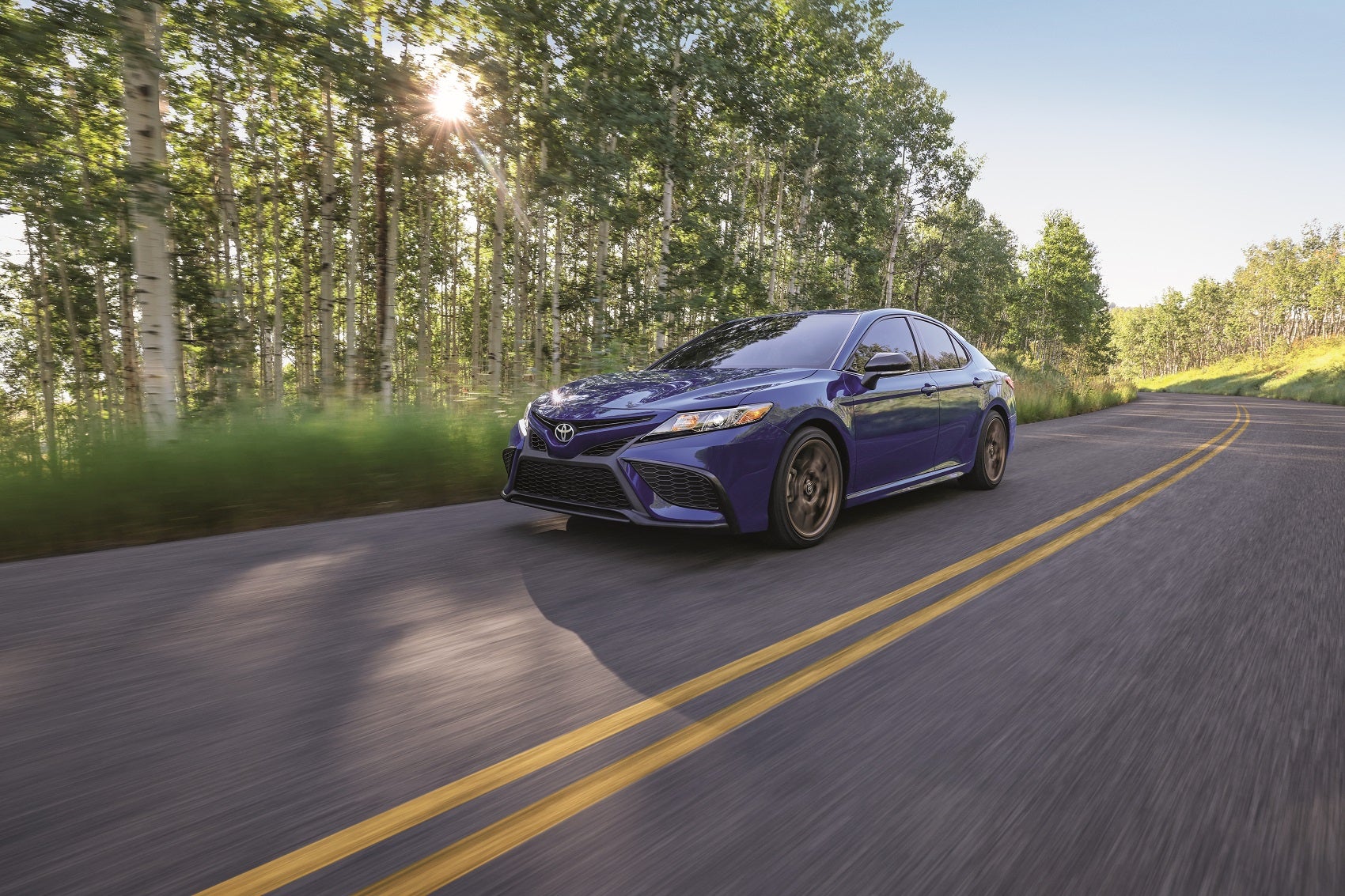
Toyota Camry vs Honda Civic
Drivers searching for a sporty and efficient sedan to travel the busy highways around Indianapolis, Bloomington, and Plainfield, IN, should seriously consider the Honda Civic and the Toyota Camry. At Andy Mohr Automotive, we’re committed to providing the best information on all our favorite models.
Continue reading our helpful comparison to determine which of these modern roadsters is the best fit for your lifestyle.
Camry vs Civic: Performance
If you’re looking for a dependable sedan that keeps your daily drive comfortable while offering engaging performance and value, both the Honda Civic and Toyota Camry deliver compelling options.
The Honda Civic lineup includes multiple trims and body styles, with engines that emphasize efficiency and responsive performance. Standard Honda Civic trims are powered by a 2.0-liter inline-4 engine that produces approximately 150 horsepower. Higher trims with the available hybrid system deliver up to 200 horsepower, providing good acceleration without sacrificing fuel economy.
The Toyota Camry takes a different approach with an all-hybrid powertrain across its range. Its hybrid system combines a 2.5-liter four-cylinder engine with electric motors to deliver up to 232 net combined horsepower on AWD-equipped models, along with strong efficiency that can reach a 51 combined EPA-estimated MPG rating on hybrid versions.
Fuel Economy
One of the biggest draws to driving a modern midsize sedan is its ability to save you money at the pump. You can be confident behind the wheel of either of these pieces of machinery, knowing that both models are engineered to go the distance. Take a look at the table below to see the standard fuel economy of these two rides:
|
Model |
EPA-estimated MPG |
|
Toyota Camry XLE |
43 city/43 highway 43/combined MPG1 |
|
Honda Civic LX |
32 city/41 highway/36 combined MPG2 |
No matter which one of these sedans you end up choosing, you can look forward to having plenty of fuel left in the tank when you get to your destination!
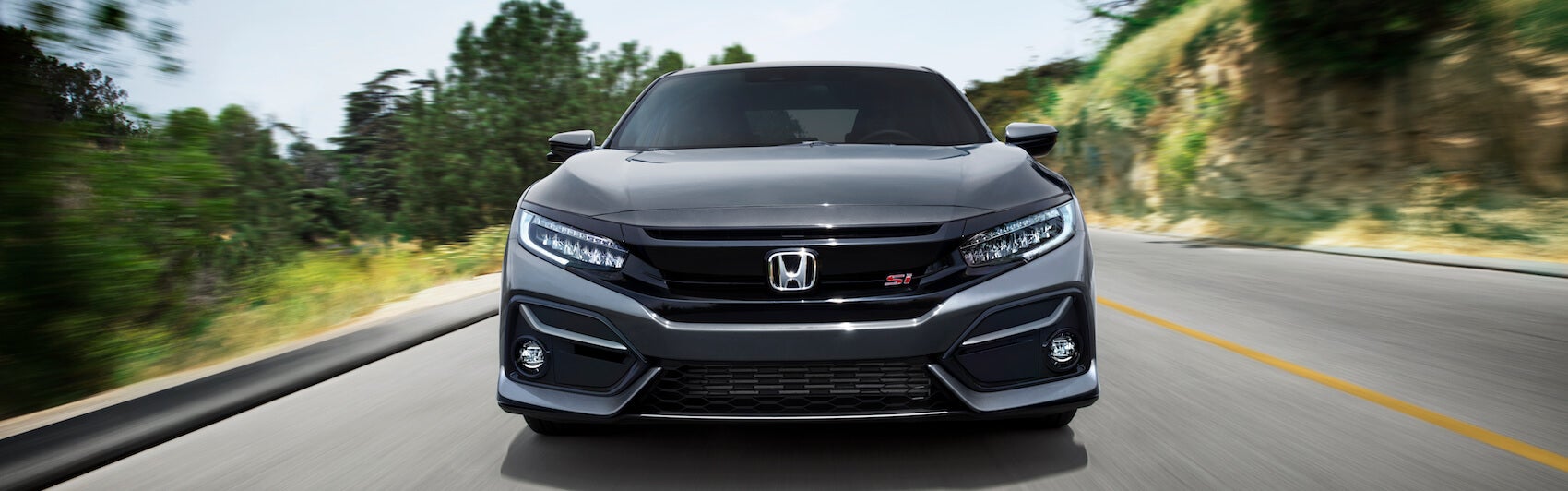
Honda Civic vs Toyota Camry: Interior Dimensions
When you take your seat inside the cabin of either model, you’re bound to be able to find plenty of room in which to wiggle around. For starters, both cars have seating for up to five occupants.
In terms of stretching out, even your tallest passengers will be able to find a high level of comfort with each model that includes:
Space (front/rear) |
Toyota Camry |
Honda Civic |
Legroom |
42.1 inches/38.0 inches |
42.3 inches/37.4 inches |
Headroom |
38.3 inches/37.3 inches |
39.3 inches/37.1 inches |
Shoulder Room |
57.7 inches/55.7 inches |
57.0 inches/56.0 inches |
Hip Room |
55.4 inches/54.6 inches |
54.3 inches/48.9 inches |
Both sedans offer thoughtfully designed cabins that prioritize passenger comfort and everyday usability. With generous front and rear legroom, supportive seating, and well-proportioned head and shoulder space, the Camry and Civic are well-suited for daily commutes, carpools, and longer drives alike.
Convenience and Technology
Inside the Honda Civic, the focus is on simplicity, comfort, and easy access to everyday tech. The Civic comes standard with a modern infotainment system that supports Apple CarPlay® and Android Auto™, allowing drivers to connect their smartphone for navigation, music, and messaging. Bluetooth® HandsFreeLink® is also included, making it easy to take calls or stream audio without taking your hands off the wheel. Higher trims add features like a larger touchscreen display and a digital driver information interface that keeps key vehicle data clearly in view.
The Toyota Camry approaches technology with a strong emphasis on connectivity and cabin comfort. It features Toyota Audio Multimedia with standard wireless Apple CarPlay® and Android Auto™, giving drivers a cable-free way to stay connected. Available features include Qi-compatible wireless smartphone charging, along with dual-zone automatic climate control and rear-seat air vents to help keep all passengers comfortable. Bluetooth® wireless technology is also included for hands-free communication and audio streaming.
Overall, both sedans provide intuitive technology that supports daily driving and keeps drivers connected, with the Civic leaning toward a clean, driver-focused layout and the Camry offering added convenience through wireless connectivity and available comfort upgrades.
Key Takeaways
The Honda Civic and Toyota Camry both stand out as smart choices for drivers navigating daily travel around Indianapolis, Bloomington, and Plainfield. The Civic appeals to those who want a compact sedan with responsive performance, efficient engines, and a clean, driver-focused interior. Its available hybrid setup adds extra power while keeping fuel use in check, making it well-suited for commuters who value balance and ease of use.
The Toyota Camry steps into the midsize category with added interior space and a standard hybrid powertrain across the lineup. With higher available horsepower and strong EPA-estimated MPG ratings, the Camry is a solid option for drivers who want extra room and confident highway performance. Both sedans offer comfortable seating for five, intuitive technology, and thoughtfully designed cabins that support long drives and everyday routines.
Choosing between the two often comes down to size preference, driving style, and how much interior space you want in your daily sedan.
FAQs
Which one is longer-lasting?
According to iSeeCars’ 2025 Longest-Lasting Cars study, both the Honda Civic and Toyota Camry rank among passenger cars with an above-average predicted chance of reaching 250,000 miles, a benchmark for long-term ownership. The Civic shows roughly a 10.9% chance of hitting that milestone, while the Camry appears to have about a 9.0% likelihood, reflecting strong durability for both models compared to the average vehicle.3
Which is better for fuel efficiency?
The Toyota Camry has an advantage in overall fuel efficiency thanks to its standard hybrid powertrain, especially for drivers who spend a lot of time in city traffic. The Honda Civic also delivers strong MPG ratings, particularly in its base trims, making it an efficient option in the compact sedan category.
Which one is better for daily commuting?
The Honda Civic is often favored for commuting due to its smaller footprint, responsive handling, and simple interior layout. The Toyota Camry, on the other hand, offers extra passenger space and a smoother highway ride, which may appeal to drivers with longer commutes or frequent passengers.
Camry vs Civic: Come See for Yourself!
Whichever of these family-friendly midsize vehicles you end up choosing, you can expect to receive years and years’ worth of enjoyment. If you’re a driver near Plainfield, Indianapolis, or Bloomington, Indiana, who’s interested in taking a closer look, schedule a test drive today!
1 EPA-estimated 52 city/49 hwy/51 combined mpg rating for 2026 Camry LE; 50 city/49 hwy/50 combined mpg rating for 2026 Camry LE AWD; 47 city/45 hwy/46 combined mpg rating for 2026 Camry SE, XLE, and XSE; 46 city/46 hwy/46 combined mpg rating for 2026 Camry SE AWD and XLE AWD; 43 city/43 hwy/43 combined mpg rating for 2026 Camry XSE AWD. Use for comparison purposes only. Your mileage will vary for many reasons, including your vehicle’s condition and how/where you drive. See www.fueleconomy.gov.
2 Fuel-Economy Ratings
32 city/41 highway/36 combined mpg rating for LX. 31 city/39 highway/34 combined mpg rating for Sport. 50 city/47 highway/49 combined mpg rating for Sport Hybrid and Sport Touring Hybrid. Based on 2026 EPA mileage ratings. Use for comparison purposes only. Your mileage will vary depending on how you drive and maintain your vehicle, driving conditions, battery-pack age/condition (hybrid trims), and other factors.
3Source:iSeeCars